

Supply Chain & Innovation
The Issue
The New Zealand agricultural system focuses heavily on a global export market. We have positioned ourselves as a significant player in the export of dairy products, meat, forestry products, fresh produce, and wine and have established strong global relationships and trade deals.These relationships must be maintained and developed. However, in this time of increasing global instability we must also consider local food security and supply chain resilience. Raw resources are running out, and in many places our infrastructure (for example, ports) are in the process of decay and face accelerating threats from climate change and social disruptions. The global economy is shifting and we have to adapt to ensure New Zealand restructures its own market and material flows.
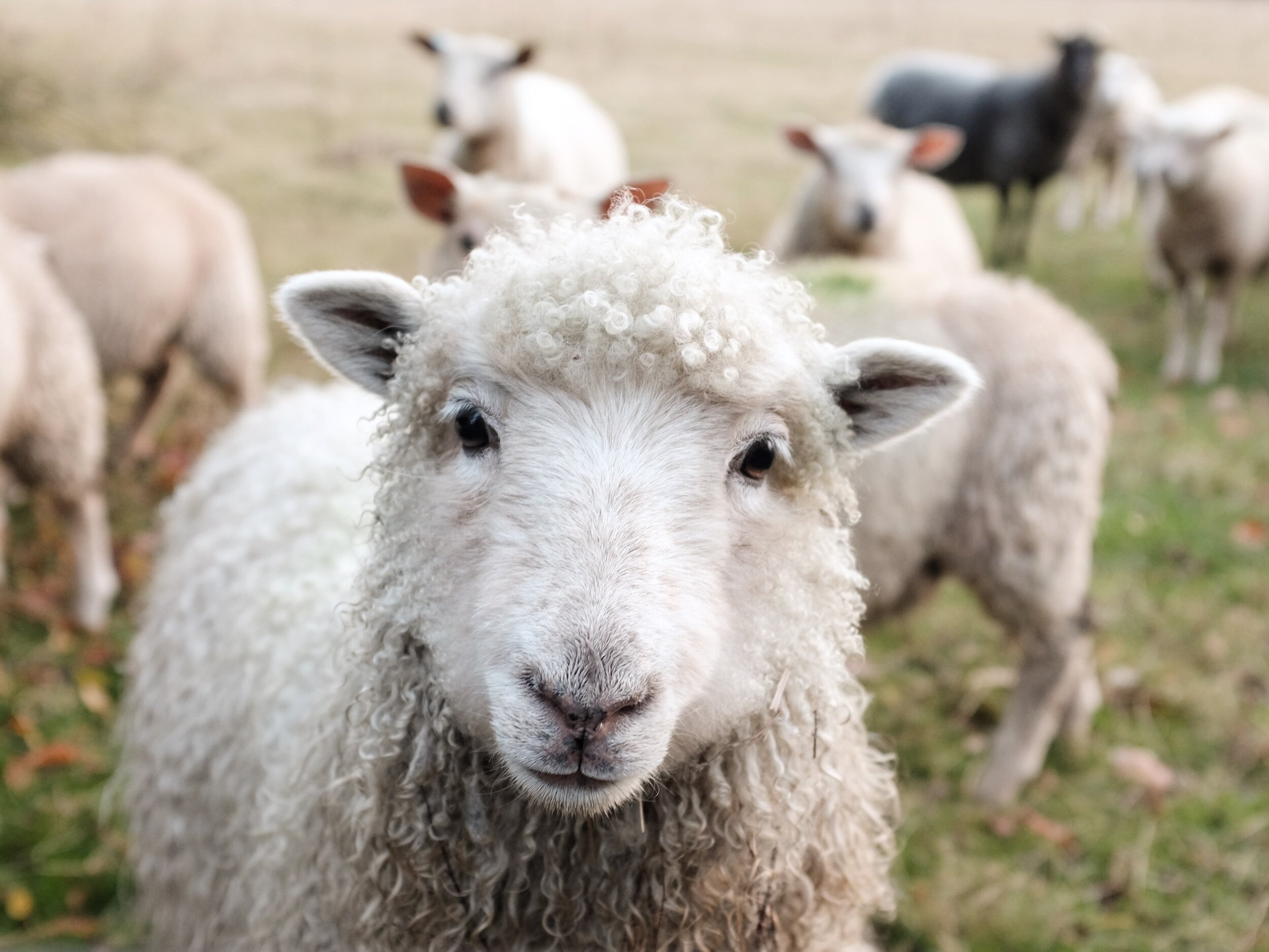
This is a global issue that has local relevance. New Zealand's agricultural products account for nearly 80% of our exports24. Kiwis are proud of this and proud of our farmers who significantly bolster our economy and sell great products to the world. However, there are several signs that our “farm to gate” commodity approach to agriculture has let down farmers and our environment. For example, although New Zealand was largely built on the back of strong wool, today this commodity is mostly burnt or buried by farmers, costing more to shear than it is worth. The global shift to synthetics in carpet and fabric is costing New Zealand sheep farmers and the environment dearly. Putting a price on petroleum fibre sales in New Zealand and building wool processing infrastructure in New Zealand are both ways to fix this.
Our current supply chains are often long, convoluted and fractured, with farmers getting the smallest part of the margin. We must embrace innovative solutions for our economy when it comes to supply and trade within agriculture. Our focus on international markets does assist with global food security and adds value to the New Zealand economy. However, it does not contribute significantly to local food security and can lead to high domestic food prices, making it difficult for some kiwi to put healthy food on their plates. We need to have a conversation on the role New Zealand plays in global food security.

The Vision
-
Most of our food, fibre, and other manufactured materials are part of globalised supply chains. Raw materials that are produced here in New Zealand are often shipped across the world to be manufactured into consumer goods. Until recently, this globalised flow of goods and services remained mostly invisible - that is, until Covid-19 exposed vulnerabilities. The impacts of climate change and the biodiversity crisis will be far larger. Even at a local level, many of our systems of supply are centralised and therefore vulnerable to even slight disturbances to business-as-usual. To optimise return we must strike a balance between our utilising economies of scale with our export industry, and supplying locally with small scale production techniques.
If the Alpine Fault ruptures or oil supplies become unavailable, most of the New Zealand population will be at risk of going hungry within days or weeks. Our supply chains are complex and lengthy. While it is nearly impossible to plan for a global shutdown of commerce tomorrow, we must reduce supply chain vulnerability where possible. This is a matter of moral responsibility.
Localised supply and production pathways must be developed in New Zealand. Localising food is not about isolationism, but about seeking balance between regional, national, and global systems of trade. Shortening supply chains can also mean higher margins for farmers. Our production systems must prioritise feeding and sheltering Kiwi. Local production can be expensive, so there needs to be a two pronged approach that enables a market for premium products nationally, but also supports a wider agenda of food sovereignty and security in New Zealand25.No kiwi families should go without access to nutritious, locally grown food. New Zealand farmers must look to achieve both international premiums and embrace streamlined local supply chains.
What would this look like in reality?
● Farmers markets, community gardens, and local butchers all proliferate around New Zealand.
● Access to local food is supported in lower socio-economic areas of New Zealand.
● Local manufacturing is supported and becomes more cost-effective as low-carbon technology improves.
● Creation of regional think tanks to determine the ability of areas to provide food and other essential resources to local communities in times of crisis.
● Investment in food transport and storage systems to enable localised, regional supply.
● New Zealand produce should be accessible in New Zealand at reasonable prices without the use of subsidies.
-
We must adopt a circular economy for agriculture. Currently our system relies on unsustainable and finite resources such as palm kernel, oil, and phosphate. Dependency on these resources is a financial risk as we rely on external supply chains vulnerable to global crises such as Covid. As these resources are finite they cannot support our industry forever. Food waste is a massive problem globally and in New Zealand. due to issues are the consumption and production interface. There must be investment into streamlining waste utilisation across industry. Innovative solutions such as the use of orange peel as silage coverings must be encouraged.
We can replace economic growth with economic efficiency to decouple economic performance from resource demand. Phasing out a linear system by designing out waste products and keeping resources in use for as long as possible can also contribute to lower emissions and less habitat loss. To build circular economy solutions we will need to address our systems flaws with a holistic and cross sectoral approach.
For example, the modern food system runs a large energy deficit and so do most farms. We should consider our claims of farming efficiency not just through the metric of human labour but of pollution and total energy use. This shift in perspective would lead to developing regenerative agricultural systems that aim for higher energy returns with less pollution. Our trend is toward larger and larger farms, yet intensive gardening systems and small farms tend to outperform large farms in yields per area. We could develop land sharing models that could usher in small scale farming without majorly disrupting current ownership structures. We need to hasten reorganisation and push the supply chain into a more sustainable domain.
What would this look like in reality?
● An increasing number of New Zealand farms become zero waste.
● Farmers have access to recycling centres locally and are encouraged to recycle farm waste like effluent, baleage wrap and chemical containers.
● Farms of the future should be encouraged to use materials such as wood, straw, other crop residues, and extracted sugars or oils as we make advances in materials science.
● Industry groups and government collaborate to design a circular economy roadmap to be implemented by 2030. This should include a plan to be prepared for what Oil Free New Zealand will look like and how the industry will navigate this transition.
-
Kiwi ingenuity, number 8 wire mentality and DIY culture all point towards a strong tendency for innovation in New Zealand. Entrepreneurship must be encouraged and supported in the rural sector. Our strong agri-tech scene here needs to broaden and provide more support to early stage grassroots projects. As we take on some major shifts in the way we do agriculture, we must nourish our kiwi ingenuity. The reformation of the outdated Resource Management Act (1991) must be updated based on the principles of this document to ensure kiwi ingenuity is encouraged.Creative solutions from academia, industry, and catchment groups must be encouraged and nourished in the New Zealand agricultural sector.
Plant based foods are increasingly popular globally and present a significant opportunity for NewZealandfoodsystems.A potentialgrowthof$80billioninrevenuehasbeenpredictedfor plant based food, compared to $23 billion from animal agriculture 26. Technologies such as precision fermentation are often viewed as a threat to traditional agricultural industries in New Zealand, however could present an opportunity to produce low impact foods, which align with the values of an increasingly environmentally conscious market. Innovative technologies such as these should be considered with an open mind, rather than viewed exclusively as a threat to New Zealand’s food sector.
What would this look like in reality?
● The RMA is replaced by 2030 with new legislation based on the principles in this document.
● New Zealand agricultural sectors considere new technologies such as precision fermentation with an open mind.
● New Zealand should consider in detail the opportunities for farmers to switch means of production to the increasing opportunities that are coming from the plant based food industry.
-
New Zealand is renowned internationally for crafting a premium products . It is important these products are well marketed. Government, cooperatives and farmers can all play a role in improving the way our products are sold to the world. Personal branding to target value added markets should be encouraged for farmers who want to differentiate and demand a premium because of their farming practices. Traceability and storytelling at a national level can also be implemented in farming practice to improve the value of our products nationally and globally. Government must have global advertising budgets for agriculture just as it has for other industries such as tourism.
What would this look like in reality?
● Marketing, personal branding, and positive narratives are used to sell our products to the world with a premium.
● New Zealand lives up to our clean green reputation and continues to build on this, lead by a strong food and fibre sector.
-
Although science and technology have changed considerably in the last two decades, gene editing (GE) remains highly contentious in New Zealand. Since the Hazardous Substance Act and New Organisms Act in 2003, New Zealand’s laws on GE have not been revisited. Since then, New Zealand has capitalised on the brand reputation of being GE free.
The members of Future Farmers are not unanimously against or in favour of GE, therefore as a non-partisan youth voice, our current stance on this matter reflects that. Future Farmers wishes to be part of the GE conversation in ways that ensure youth perspectives towards GE (in favour, against, or otherwise) are represented. It is important to note that GE is not a ‘silver bullet’ to fixing New Zealand’s agriculture and climate challenges.
What would this look like in reality?
● GE is treated carefully with a dual science and Māori informed approach to discussion;
● A large cost-benefit analysis and detailed research on the possibility of GE in New Zealand agriculture.
● The licensing and sovereignty concerns surrounding GE are addressed.
● The cultural and ethical issues surrounding GE are considered.
● Clear and simple descriptions of GE processes are developed and made accessible to the public.
● Mana whenua are a key part of the GE conversation.
● Inclusive, public consultation on New Zealand's GE policy should be lead by a science based narrative from an independent expert group.
Key Recommendations
Our initial key recommendations for how to reach this vision for the industry’s supply chains and innovation are:
Wool import tariffs are removed globally.
Petroleum fibre sales in New Zealand are taxed.
Bring wool processing infrastructure to New Zealand.
Government investment and public incentives should be given for circular economy solutions.
In the case of New Zealand revisiting the GE discussion, the conversation must be informed by the latest science.