


Farm Management
The Issue
Combatting the climate and biodiversity crisis will require us to change all aspects of farm management. We have to look at what we are putting into the air, soil and water and reassess our relationship with these elements. We must utilise our land so that we maximise production while also optimising the support we can return to ecosystem services. The way to answer these questions is through science, mātauranga, innovation and reassessing what a successful farming landscape looks like.
Key topics of national contention are discussed here as they have direct implications for regulation on farms. Adapting regulation and culture around a new face of farm management will not only help farmers keep ahead of regulation, but it will ensure New Zealand aligns with global consumer trends so that we can command an increasing premium for our products. Farm Environment Plans (FEPs) will be a key part of farming management in the future. Every farmer should have a FEP by the end of 2024 that includes a purpose statement which aligns with the increasingly ambitious environmental regulatory framework discussed in this document. The regulation of farm management needs balanced community and national consensus and must be ambitious at the same time.
The Vision
-
New Zealand is undergoing a freshwater crisis which needs urgent attention. Currently, 82% of rivers in pastoral farming land are un-swimmable18 and 76% of our endemic freshwater fish are threatened with extinction or at risk of becoming threatened 19. Significant fencing of waterways is underway on farms across New Zealand, but there is still much to be done. Future farmers support the updated freshwater reforms as the key policy to drive action on water quality in New Zealand. Nitrate limits should be legislated at the regional and catchment level, rather than at the national level. Catchment groups can isolate and track water quality problems to their source. Every farm in New Zealand should be part of a catchment group by 2025, and include water quality management in their FEP. National targets are needed to return New Zealand water quality to pre-settlement levels. In line with the freshwater reforms Nitrate in freshwater should be limited to no more than 1mg/L and a limit of 190kg N/ha applied nationwide on any farm system20. Water quality is not just determined by nitrate levels but is also linked to various indicators of water system health such as phosphate and sedimentation. Real time monitoring of water quality indicators are incredibly important for the future of New Zealand freshwater ecosystems.
What would this look like in reality?
● Irrigation technology improves in precision so minimal water is overused.
● Technology to lower the high cost of real time nitrate testing should be encouraged.
● A bottom line should be given for a dissolved nitrogen limit of under 1mg/L for our freshwater.
● Future farmers supports the freshwater reforms and agrees no more than 190kg/ ha of urea should be applied nationwide. However regionally, over time these limits will fall and rates should be administered at the catchment level.
-
New Zealand food systems are unique globally due to our island climate. Unlike on large continents, New Zealand temperatures do not reach seasonal extremes and maintain a relatively stable temperate climate. For this reason New Zealand has had no need for feedlot systems, or to house animals indoors over winter. However, some parts of New Zealand grow less or no food in winter, and winter crops are needed to feed stock in cooler months. This has been managed well in some cases, but winter grazing is seen as a controversial aspect of farming in New Zealand, as it has contributed to poor water quality and in some cases poor animal welfare. Regulation and science must be used to support farmers in transitioning to alternative winter feeding practices where required.
What would this look like in reality?
● Increased funding is provided for research on the cost and yield of multispecies winter crops, and data on this is made accessible.
● Restrictions on winter grazing are practical and ambitious in reducing impact.
● Minimal tillage should be encouraged.
● There should be no calendar deadlines for regrassing.
-
Regenerative agriculture (RA) has become extremely topical in the New Zealand farming landscape over the past few years. A large amount of work is being done by research institutes, alongside the already thriving regenerative farmer-led groups on the ground to develop this space further. We adopt Pure Advantage’s definition of regenerative agriculture, which states:
“[RA is] a set of farming principles and practices that enrich soils, improve watersheds, enhance ecosystem services such as soil carbon and nitrogen sequestration, improve biodiversity, and promote farmer and livestock welfare”
However the broader human elements of RA are vital to understanding the concept. For example, RA is also:
“the application of an ecological approach to the agricultural landscape with a particular focus on the health of our soil, plants, animals and people, and an expectation of similar or improved profitability. Regenerative farming encourages a mindset of continuous improvement, takes into account that every farm and farmer is different, and recognises the connection between the health of our farms and the health and resilience of our communities, waterways, biodiversity and climate.” (Maury Leyland Penno)
Regenerative agriculture is therefore both practice and philosophy and as such is subjective. This is unlike organic farming where a specific set of standards are applied.RA i can be thought about in the same context as conventional agriculture has been in the past - it is a systems approach for a new generation of farming.
What would this look like in reality?
● TThe uptake of RA becomes part of the necessary transition farming needs to take to be fully balanced with natural ecosystem limits.
● The philosophical act of regeneration on farms should be encouraged and treated separately to robust discussion that must take place around the application of farming practices. Both mindset and on-farm practices are key to transforming New Zealand agriculture.
● Certifications like the Ecological Outcome Verification from Savoury institute are an integral part of the regenerative agriculture journey but are not essential for every farm practising regenerative agriculture, as the benefits from regenerative agriculture go beyond receiving a premium for the product.
-
Overuse and misuse of chemicals on farms can create issues for human and ecological health. For example, urea is the most common fertiliser used in conventional agriculture and has led to yield increase. However, it has also caused damage to our waterways. The benefits and health risks of chemical use (such as glyphosate) are not always clearly communicated.
Supply chains for some chemicals and fertilisers, such as phosphate, are associated with human rights abuses. It is unacceptable to base our industry on the exploitation of people or land. Phosphate is also a finite resource, and the inevitability of peak phosphate must be made widely known to New Zealanders so we can shift to a better system.
As farming in New Zealand transitions to support ecological health and balance, the use of chemicals should err on the side of restraint. Where possible, chemical use should be designed out of farming systems , especially in cases of unethical supply chains or products that are based on finite natural resources.
What would this look like in reality?
● Humanitarian implications of imported phosphate is considered, (e.g. in West Africa) . Fertiliser companies that are the major importers of unethical phosphate acknowledge their role in perpetuating harm and work rapidly towards finding ethical solutions.
● Glyphosate, now a documented carcinogen, should be treated with increased caution and restraint where possible.
● Urea application should be minimised where possible.
● An ongoing conversation is had regarding designing out the use of any chemicals that
are associated with human rights abuses or are finite resources.
-
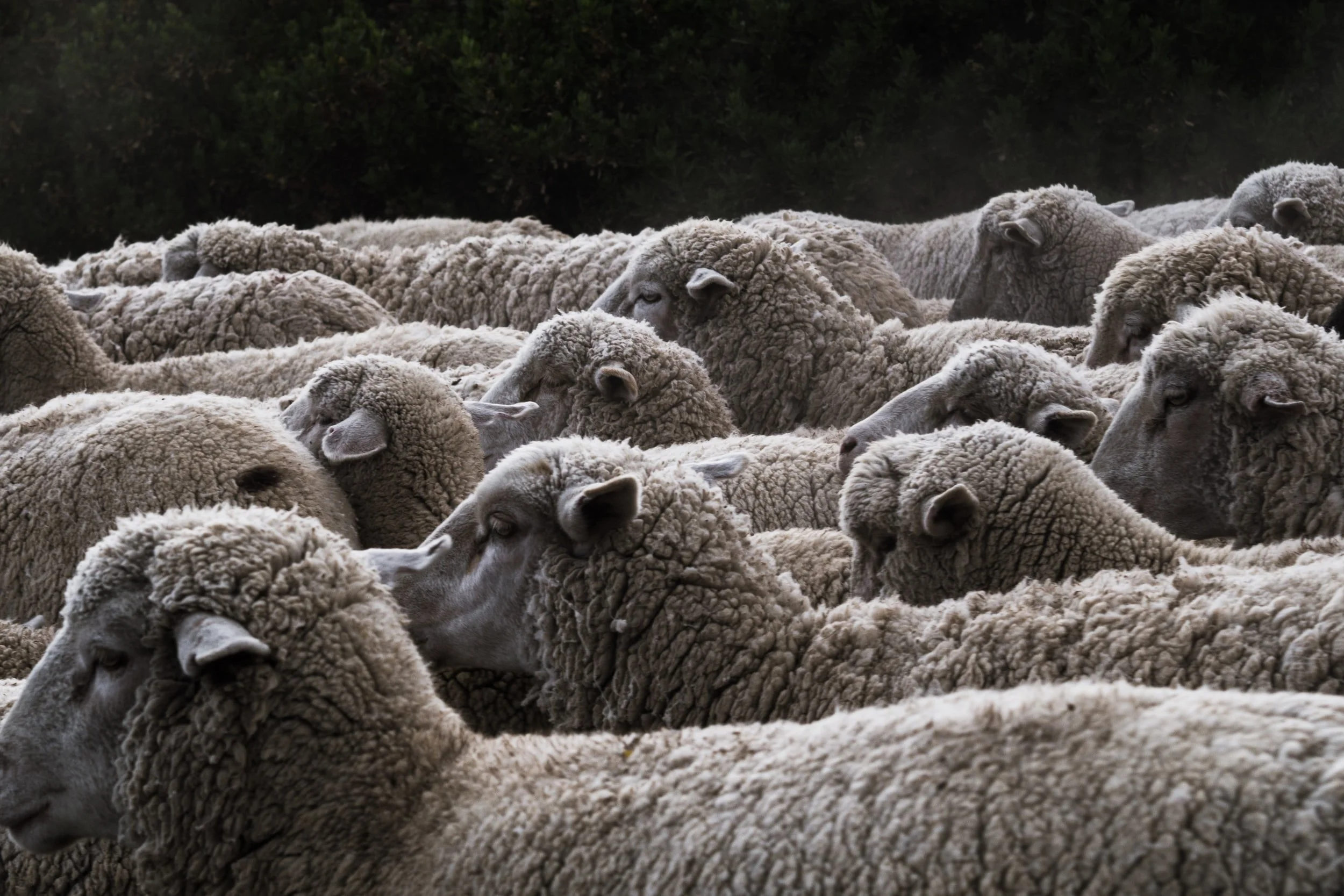
Animal welfare is a critical measure of performance on farms and should be maintained to the highest standard. The majority of farmers care deeply about their animals, but animal welfare can be continually improved. Consumers increasingly want proof of high animal welfare standards. It is also in a farmer's best interests to take care of their animals as happy cows and sheep lead to a better yield. It is also important that in our pursuit of a sustainable food future we do not take sentient life for granted.
What would this look like in reality?
● The animal welfare concerns around ‘pugging’ (cows spending extended time in deep mud) and winter grazing need to be addressed.
● New Zealand should consider a new future for bobby cows.
● A national strategy is developed for planting diverse shelter belts with co-benefits such as biodiversity, food, and timber.
● Respect for animals is upheld throughout the supply chain.
● The disconnect between food and the sentient nature of animals is repaired at the consumption interface.
● Hemp for cattle should not be treated as a drug and regulation of it should be moved from the Ministry of Health to sit with MPI.
Key Recommendations
Our initial key recommendations for how to reach this vision for farm management are:
In line with the freshwater reforms Nitrate in freshwater should be limited to no more than 1mg/L and a limit of 190kg/ha of urea should be applied nationwide.
Increased funding is provided for research oncost and yield of multispecies winter crops and data is made easily accessible.
Restrictions on winter grazing are practical and ambitious in reducing impact
Establish a regenerative agriculture certification programme and encourage the uptake of the wider philosophical principles associated with this approach including continual improvement.
New Zealand should not participate in the purchase of chemical or other products that are unethical or sustainable in their supply chain.
The disconnect between food and the sentient nature of animals is repaired at the consumption interface.